Solidity Tutorial – Learn Ethereum Smart Contract Programming

Blockchain technology is revolutionizing the digital world, and Solidity has become one of the most important programming languages in Web3 development. If you want to build decentralized applications (dApps), create tokens, or develop smart contracts on Ethereum, learning Solidity is an essential skill.

To help beginners get started, I have created a comprehensive free Solidity tutorial that explains blockchain programming step by step.

👉 Start learning Solidity here:
https://www.blockchainguide.biz/solidity-tutor/index.html


What is Solidity?

Solidity is a high-level programming language used to write smart contracts that run on the Ethereum Virtual Machine (EVM). Smart contracts are self-executing programs stored on the blockchain that automatically enforce agreements between parties without intermediaries.

Solidity is widely used to develop:

  • Decentralized applications (dApps)
  • DeFi protocols
  • NFT smart contracts
  • Cryptocurrency tokens (ERC-20, ERC-721, etc.)
  • Blockchain governance systems

The syntax of Solidity is influenced by languages such as JavaScript, Python, and C++, making it easier for programmers to transition into blockchain development.


Why Learn Solidity?

The demand for blockchain developers is growing rapidly as companies explore decentralized technologies. By learning Solidity, you can:

  • Build Ethereum smart contracts
  • Develop Web3 applications
  • Create your own cryptocurrency tokens
  • Work on NFT and DeFi projects
  • Participate in the rapidly expanding blockchain ecosystem

For developers interested in Web3 careers, Solidity remains one of the most valuable programming skills today.


Free Solidity Tutorial for Beginners

The Solidity tutorial on BlockchainGuide.biz provides a beginner-friendly introduction to smart contract programming.

In this tutorial, you will learn:

  • Introduction to Ethereum and smart contracts
  • Basic Solidity syntax
  • Variables, functions, and data types
  • Writing and compiling your first smart contract
  • Deploying contracts to the blockchain
  • Practical programming examples

The lessons are designed to help students, programmers, and blockchain enthusiasts learn Solidity in a structured and easy-to-understand way.

👉 Access the tutorial here:
https://www.blockchainguide.biz/solidity-tutor/index.html


Who Should Learn Solidity?

This tutorial is ideal for:

  • Beginner programmers interested in blockchain
  • Web developers moving into Web3 development
  • Students learning decentralized technologies
  • Entrepreneurs building blockchain applications

No prior blockchain experience is required, although basic programming knowledge will be helpful.


Start Your Blockchain Development Journey

Solidity programming is the foundation of many decentralized systems running on Ethereum and other EVM-compatible blockchains. Learning how to write smart contracts gives you the ability to build secure, transparent, and trustless applications.

If you want to explore the exciting world of Web3 development, start learning Solidity today.

🚀 Begin your Solidity journey now:
https://www.blockchainguide.biz/solidity-tutor/index.html
Beyond Bitcoin: Understanding the Difference Between Blockchain and Crypto


Introduction

When people hear the word blockchain, the first thing that often comes to mind is Bitcoin or cryptocurrency. While it’s true that blockchain technology powers cryptocurrencies, the two terms are not interchangeable. In fact, the widespread association of blockchain with crypto has caused significant confusion and even skepticism in the general public.

This blog post aims to clear up that confusion. We’ll explain the fundamental difference between blockchain and cryptocurrency, and explore the wide array of real-world applications of blockchain technology — far beyond digital currencies.


What Is Blockchain?

At its core, blockchain is a type of distributed ledger technology (DLT). Think of it as a secure, digital record-keeping system that is shared across a network of computers. Each record (or “block”) is linked to the previous one, forming a “chain” that is immutable — meaning it cannot be altered once added.

The key features of blockchain include:

  • Transparency: Everyone in the network can view the same data.
  • Security: Data is encrypted and validated through consensus mechanisms.
  • Decentralization: No single authority controls the network.
  • Immutability: Records are permanent and tamper-proof.

What Is Cryptocurrency?

Cryptocurrency is a digital or virtual currency that uses cryptography for security. Cryptocurrencies like Bitcoin, Ethereum, and many others use blockchain to record transactions securely and transparently.

In simple terms:

Cryptocurrency is just one application of blockchain technology — not the technology itself.


Why the Confusion?

The confusion arises because Bitcoin was the first popular application of blockchain technology. For many people, their first and only exposure to blockchain has been through crypto trading, investing, or news coverage related to scams, price swings, or regulatory crackdowns.

This limited exposure creates the false impression that blockchain equals cryptocurrency, which is far from the truth.


Blockchain Applications Beyond Cryptocurrency

Here are several industries where blockchain is being used today — without involving cryptocurrencies:


1. Supply Chain Management

Blockchain allows companies to track goods from their origin to the end consumer. This improves transparency, prevents fraud, and ensures ethical sourcing (e.g., tracing whether diamonds or cocoa are conflict-free).

Example: IBM’s Food Trust platform helps companies trace the journey of food items, improving safety and reducing waste.


2. Healthcare

Blockchain can be used to secure patient records, ensuring that data is accessible only to authorized parties and protected from tampering or hacking.

Example: MedicalChain and other projects use blockchain to allow patients to control access to their own health data.


3. Voting Systems

Blockchain can power secure, transparent, and tamper-proof digital voting, potentially solving problems of election fraud and increasing voter trust.

Example: Estonia and some U.S. states have piloted blockchain voting systems.


4. Digital Identity

Blockchain can be used to create self-sovereign digital identities that are secure and verifiable — reducing identity theft and simplifying access to services.

Example: Projects like ID2020 and Sovrin aim to provide blockchain-based digital identity systems for refugees and underserved populations.


5. Finance and Banking (Beyond Crypto)

Banks are using blockchain for cross-border payments, smart contracts, and real-time settlement — increasing speed, reducing fees, and improving security.

Example: JP Morgan’s Onyx platform and RippleNet use blockchain for fast, international transactions without relying on cryptocurrencies directly.


6. Real Estate and Land Registry

Blockchain can simplify the process of buying and selling property by recording ownership, preventing fraud, and reducing paperwork.

Example: Countries like Sweden and Georgia have adopted blockchain to record land titles.


7. Education and Credentials

Universities and institutions are issuing tamper-proof academic certificates on the blockchain that are instantly verifiable by employers.

Example: MIT issues blockchain-based diplomas that graduates can share with employers or institutions globally.


Final Thoughts

It’s time to separate the technology (blockchain) from just one of its use cases (cryptocurrency). While cryptocurrencies have their place, the potential of blockchain stretches far beyond digital coins.

From revolutionizing healthcare and education to transforming government and finance, blockchain is poised to be one of the most impactful technologies of our time.

Understanding this distinction helps us better embrace innovation — and move past the hype or fear often associated with crypto headlines.


Call to Action
If you’ve only associated blockchain with Bitcoin, now is the time to dig deeper. Explore how this powerful technology can transform industries and improve trust, transparency, and efficiency in everyday life.

Stay informed. Stay curious. The future is blockchained — with or without the coins.


AI and Blockchain: The Perfect Combination for a Secure and Intelligent Digital Future


Introduction

Artificial Intelligence (AI) and blockchain are two of the most transformative technologies of our time. AI brings intelligence, automation, and creativity, while blockchain ensures transparency, data integrity, and security. When combined, these two powerful forces complement each other to create robust, privacy-respecting, and highly efficient digital systems. The convergence of AI’s generative capabilities with blockchain’s secure and decentralized infrastructure is not just a trend—it’s a revolution in the making.


1. The Rise of Generative AI

Generative AI, especially large language models (LLMs) and image synthesis models, has demonstrated tremendous power in creating content, writing code, generating art, composing music, and even designing complex systems. From ChatGPT to DALL·E, these models are transforming industries by automating creative and cognitive tasks.

However, this explosion of AI-generated content also raises critical concerns:

  • Data authenticity: Who created the content? Can we trust it?
  • Ownership rights: Who owns the data generated by AI?
  • Privacy: Is the training data ethically sourced and protected?

These are questions that blockchain is uniquely positioned to answer.


2. Blockchain: Trust, Transparency, and Data Sovereignty

Blockchain technology is fundamentally a decentralized, tamper-resistant ledger. It excels in ensuring:

  • Data integrity: Once data is recorded, it cannot be altered without consensus.
  • Decentralization: No single point of failure or control.
  • User privacy and sovereignty: Through self-sovereign identity (SSI) and cryptographic tools like zero-knowledge proofs.

In AI, where data is both the input and the output, blockchain ensures that this data is secure, traceable, and ethically managed.


3. The Symbiotic Relationship: AI + Blockchain

a. Provenance and Trust in AI-Generated Content

Blockchain can store metadata about AI-generated content—such as when it was created, by whom, using which model—ensuring provenance. This makes it possible to verify the authenticity of content in a world plagued by deepfakes, misinformation, and AI-generated media.

b. Training Data Transparency

AI models often require massive datasets to train. Blockchain can record where training data comes from, how it was obtained, and under what licensing terms—ensuring ethical AI and helping mitigate bias or misuse.

c. Incentivized Data Sharing

Through tokenization and smart contracts, blockchain can create marketplaces where users are rewarded for sharing data securely with AI developers. This opens up privacy-preserving, decentralized AI training systems that don’t rely on big tech monopolies.

d. Decentralized AI Models

By integrating blockchain, AI models can be deployed on decentralized networks (e.g., the Internet Computer, Ocean Protocol, or Fetch.ai), allowing models to run without centralized servers, reducing censorship, and increasing resilience.


4. Real-World Use Cases

  • Healthcare: AI analyzes patient data for diagnosis, while blockchain ensures the data remains private, auditable, and owned by the patient.
  • Finance: AI detects fraud in real time, while blockchain provides transparent transaction logs that cannot be altered.
  • Supply Chain: AI predicts delays or optimizes routes, while blockchain ensures the traceability of goods from source to shelf.
  • Digital Identity: AI verifies identity biometrics, while blockchain anchors that identity in a tamper-proof, self-sovereign framework.

5. Challenges and the Road Ahead

While the combination is promising, integration comes with challenges:

  • Scalability: Blockchain networks must handle AI’s data throughput demands.
  • Interoperability: Connecting different blockchains and AI systems seamlessly.
  • Regulation: Both fields face evolving regulatory scrutiny, especially around data protection and accountability.

Nevertheless, as Web3 infrastructure matures and AI governance frameworks evolve, this fusion will become more seamless and powerful.


Conclusion

The marriage of AI and blockchain is more than a technological convergence—it’s the foundation of a new digital paradigm. AI gives systems the ability to learn, create, and make decisions. Blockchain ensures those systems remain secure, transparent, and accountable. Together, they empower a future where innovation doesn’t come at the cost of trust, privacy, or ethical responsibility.

As we stand at the intersection of intelligence and integrity, AI and blockchain are not just complementary—they are indispensable allies shaping the next generation of the internet.


Spend Crypto Like Fiat: Introducing RedotPay

Introducing RedotPay: Revolutionizing Crypto Payments

In a world where digital currencies are becoming mainstream, RedotPay stands at the forefront, transforming how we handle our crypto assets. RedotPay bridges the gap between cryptocurrencies and everyday spending, making it as easy to use your digital assets as traditional fiat money.

Seamless Integration

RedotPay offers both virtual and physical cards that are widely accepted across 44 million merchants globally. Whether you’re paying for a coffee, booking a flight, or shopping online, RedotPay ensures your crypto transactions are smooth and hassle-free. With compatibility with Apple Pay and Google Pay, you can use your digital wallet on your smartphone without needing to convert your crypto into fiat currency in advance.

Instant Transactions

One of the standout features of RedotPay is its instant transaction capability. Unlike traditional banking systems that can take days to process transfers, RedotPay enables real-time payments. This feature is particularly beneficial for those who need to make quick transactions without the wait time typically associated with crypto conversions.

Security You Can Trust

Security is paramount when it comes to managing digital assets. RedotPay provides robust custodial services with $50 million insurance coverage, giving you peace of mind that your assets are protected. The platform’s advanced security measures ensure that your transactions and personal data remain safe.

Zero Fees

RedotPay offers fee-free crypto transfers, making it an economical choice for users. You can transfer your digital assets without worrying about hidden charges or additional costs. This feature is particularly advantageous for regular users who want to maximize the value of their assets.

User-Friendly Experience

Designed with the user in mind, RedotPay’s platform is intuitive and easy to navigate. Whether you are a seasoned crypto enthusiast or a newcomer to the digital currency world, RedotPay makes the process straightforward and user-friendly.

Expanding Horizons

As cryptocurrency adoption continues to grow, RedotPay is committed to expanding its services and staying ahead of the curve. By continuously innovating and adapting to market needs, RedotPay ensures that it remains a leader in the crypto payment space.

Conclusion

RedotPay is more than just a payment platform; it’s a gateway to the future of financial transactions. With its wide acceptance, instant transactions, robust security, and zero fees, RedotPay offers a comprehensive solution for all your crypto payment needs. Embrace the future of payments with RedotPay and experience the convenience and security of using your crypto assets anytime, anywhere.

You may sign up Redotpay using the following link: https://url.hk/i/en/5nbca

Currently, Redotpay does not provide support to residents of certain countries and regions, including Afghanistan, Belarus, Burma (Myanmar), Burundi, Canada, Central African Republic, Mainland China, Cuba, Darfur, Democratic Republic of the Congo, Eritrea, Ethiopia, Guinea-Bissau, Haiti, Iran, Iraq, ISIL (Da’esh), AI – Qaida and the Taliban, Lebanon, Liberia, Libya, Mali, Nicaragua, North Korea, Russia, Rwanda, Sierra Leone, Somalia, South Sudan, Sudan, Syria, Ukraine, United States, Venezuela, Yemen, Zimbabwe residents.


Disclaimer: Always conduct your own research before investing in or using any financial services. The information provided here is based on the features available at the time of writing and may be subject to change.

What is Web3?

Web3 and metaverse have been two buzzwords for the year 2022, but according to the World Economic Forum, Web 3 is essentially a synonym for the metaverse. Therefore, I wish to discuss the two concepts together instead of writing two articles.

What is Web3.0? It can simply be understood from the following aspects:

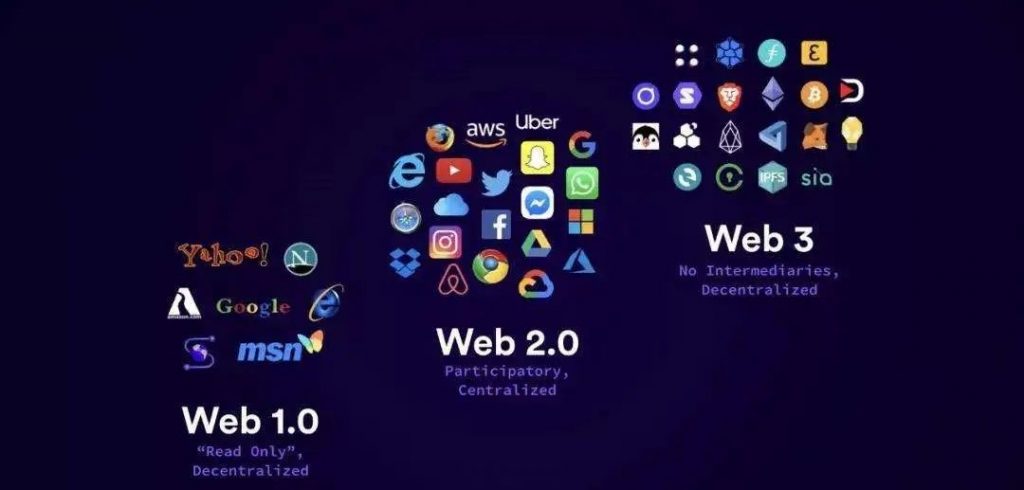
  • Web1.0 is “read-only”;
  • Web2.0 is “readable + writable” (read + write);
  • Web3 is “read+write+own” (read+write+own).

Firstly, web1.0 is represented by websites Yahoo and Sina, which solely provide information to users . During this era, most users can only read information on the web while very few website developers could create content, I was one of them. I created my first website in 1995 titled ‘Visual Basic Tutorial” which still ranks top in Google search for the keyword ‘Visual Basic’. Web2.0 is an interactive web comprising blogs, social media like Facebook, Instagram, Twitter, Whatsapp, WeChat, Tiktok and more, which users can interact and generate content. On the other hand, web3.0 not only allows users to generate content but the content data is owned by the user, not controlled by the platform.

Secondly, we can define the web revolution by the degree of decentralization. Simply put, web1.0 is semi-centralized, Web2.0 is centralized and web3 is fully decentralized.

Comparison between Web 1.0, Web 2.0 and Web 3.0

In the Web1.0 era, decentralized personal websites formed half of the Web while the other half were centralized, both sides formed a semi-decentralized ecosystem. In the Web2.0 era, information islands are formed, and large companies such as FAANG monopolize the web and control users’ data and while numerous individual and SME websites formed a small portion of the web. On the other hand, web3.0 will be purely decentralized where data is owned and controlled by users. Web 3 is a concept for the next generation of the internet. It is the evolution of how users are able to control and own their creations and online content, digital assets and online identities. In Web 3, however, users can create content while owning, controlling and monetizing them through the implementation of blockchain and cryptocurrencies.

Data privacy is another issue of the current Web 2.0 internet. While the centralized entities have full control over the access to the service, they have full control over the users’ data. Users register to access a service and give up their precious private data and content in exchange for the convenience of the service, by agreeing to the terms of services. However, in Web3, not a single entity has control over the access to the service as it’s open to everyone. No registration is needed, users then have complete control over their private data, but at the same time, users have to take the responsibility to protect their own data and assets as they will become the only custodians.

The third aspect:

Web1.0 and Web2.0 are information Internet while Web3 is the Internet of Value. Web1.0 and Web2.0 are essentially transmitting information and focusing on consumption; while Web3 is transmitting value and creating wealth. Therefore, Web3 can be simply understood as the Internet powered by blockchain technology. It will solve the current Internet “central monopoly” problem, help users regain their data sovereignty, and recreate a better ecosystem in the digital world. Internet world. If you really understand the above changes, then you will understand that Web3 is revolutionary.

Key features of Web3 are:

Decentralized

Web3 data are typically stored in decentralized ledger like blockchain, so no single system has access to it all. It is dispersed across multiple platforms. This facilitates decentralized access and eliminate single point of failure .

Permissionless

The decentralized web can be accessed by users without requiring special permissions and KYC. Users will not need to disclose their personal information to access specific services. There will be no need to compromise privacy or share any other information.

Secure

Web 3 is more secure since decentralization makes it more difficult for hackers to target specific databases. Besides that, all data are encrypted based on cryptographic hash which add a security layer to the distributed database system.

Why we don’t call web3 as web3.0? Because they are fundamentally different.

Differences between web3 and web3.0

Web 3.0 aka semantic web focuses on efficiency and intelligence by reusing and linking data across websites. Web3 aka the decentralized web, however, puts a strong emphasis on security and empowerment by returning control of data and identity to users.

Semantic web uses a central place called the solid pod to store all user data, enabling users to handle third-party access to their data. Solid pods also issue a unique WebID for users that act as an identity within the ecosystem. In the blockchain-based web3, users can store their data in a cryptocurrency wallet, which they can access using their private keys.

Additionally, they both use different technologies to implement their purpose of data security. Web3 uses blockchain technology, while in web 3.0, certain data interchange technologies like RDF, SPARQL, OWL, and SKOS are used.

Data in web3 is difficult to modify or delete since it is scattered across multiple nodes; however, data in web3.0 can be changed effortlessly. Furthermore, the data stored in the solid pod is centralized, while the keys stored in crypto wallets provide access to the data of assets that reside on a blockchain

The differences are summarised in the following table:

ParameterWeb3Web3.0
Distribution ModelDecentralized peer-to-peerClient/Server
ProtocolBlockchain/ipfshttp/https
Relationship to World Wide WebAn Alternative to the World Wide WebThe continuation of the World Wide Web
VisionEliminates intermediaries and emphasis on security and empowerment by returning control of data and identity to users.  Evolving to a semantic web to make web content machine readable.

To learn more about Web3, please check out my book:

Reference