Build a Sample Coin with Truffle

🚀 New Tutorial: Create a Cryptocurrency Using Solidity and Truffle

I have just published a new hands-on tutorial that shows how to build a sample cryptocurrency using the Truffle Framework and Solidity on Ethereum.

In this tutorial, you will learn how to:
✔ Set up a blockchain development environment
✔ Create a smart contract using Solidity
✔ Compile and test contracts with Truffle
✔ Interact with the contract using Web3
✔ Deploy the contract to a local blockchain using Ganache

This practical example uses the MetaCoin project, which is a great starting point for developers who want to understand how cryptocurrencies and smart contracts work on Ethereum.

Check out the tutorial here:

https://www.blockchainguide.biz/crypto-tutorial/index.html

Solidity Tutorial – Learn Ethereum Smart Contract Programming

Blockchain technology is revolutionizing the digital world, and Solidity has become one of the most important programming languages in Web3 development. If you want to build decentralized applications (dApps), create tokens, or develop smart contracts on Ethereum, learning Solidity is an essential skill.

To help beginners get started, I have created a comprehensive free Solidity tutorial that explains blockchain programming step by step.

👉 Start learning Solidity here:
https://www.blockchainguide.biz/solidity-tutor/index.html


What is Solidity?

Solidity is a high-level programming language used to write smart contracts that run on the Ethereum Virtual Machine (EVM). Smart contracts are self-executing programs stored on the blockchain that automatically enforce agreements between parties without intermediaries.

Solidity is widely used to develop:

  • Decentralized applications (dApps)
  • DeFi protocols
  • NFT smart contracts
  • Cryptocurrency tokens (ERC-20, ERC-721, etc.)
  • Blockchain governance systems

The syntax of Solidity is influenced by languages such as JavaScript, Python, and C++, making it easier for programmers to transition into blockchain development.


Why Learn Solidity?

The demand for blockchain developers is growing rapidly as companies explore decentralized technologies. By learning Solidity, you can:

  • Build Ethereum smart contracts
  • Develop Web3 applications
  • Create your own cryptocurrency tokens
  • Work on NFT and DeFi projects
  • Participate in the rapidly expanding blockchain ecosystem

For developers interested in Web3 careers, Solidity remains one of the most valuable programming skills today.


Free Solidity Tutorial for Beginners

The Solidity tutorial on BlockchainGuide.biz provides a beginner-friendly introduction to smart contract programming.

In this tutorial, you will learn:

  • Introduction to Ethereum and smart contracts
  • Basic Solidity syntax
  • Variables, functions, and data types
  • Writing and compiling your first smart contract
  • Deploying contracts to the blockchain
  • Practical programming examples

The lessons are designed to help students, programmers, and blockchain enthusiasts learn Solidity in a structured and easy-to-understand way.

👉 Access the tutorial here:
https://www.blockchainguide.biz/solidity-tutor/index.html


Who Should Learn Solidity?

This tutorial is ideal for:

  • Beginner programmers interested in blockchain
  • Web developers moving into Web3 development
  • Students learning decentralized technologies
  • Entrepreneurs building blockchain applications

No prior blockchain experience is required, although basic programming knowledge will be helpful.


Start Your Blockchain Development Journey

Solidity programming is the foundation of many decentralized systems running on Ethereum and other EVM-compatible blockchains. Learning how to write smart contracts gives you the ability to build secure, transparent, and trustless applications.

If you want to explore the exciting world of Web3 development, start learning Solidity today.

🚀 Begin your Solidity journey now:
https://www.blockchainguide.biz/solidity-tutor/index.html

Beyond Bitcoin: Understanding the Difference Between Blockchain and Crypto


Introduction

When people hear the word blockchain, the first thing that often comes to mind is Bitcoin or cryptocurrency. While it’s true that blockchain technology powers cryptocurrencies, the two terms are not interchangeable. In fact, the widespread association of blockchain with crypto has caused significant confusion and even skepticism in the general public.

This blog post aims to clear up that confusion. We’ll explain the fundamental difference between blockchain and cryptocurrency, and explore the wide array of real-world applications of blockchain technology — far beyond digital currencies.


What Is Blockchain?

At its core, blockchain is a type of distributed ledger technology (DLT). Think of it as a secure, digital record-keeping system that is shared across a network of computers. Each record (or “block”) is linked to the previous one, forming a “chain” that is immutable — meaning it cannot be altered once added.

The key features of blockchain include:

  • Transparency: Everyone in the network can view the same data.
  • Security: Data is encrypted and validated through consensus mechanisms.
  • Decentralization: No single authority controls the network.
  • Immutability: Records are permanent and tamper-proof.

What Is Cryptocurrency?

Cryptocurrency is a digital or virtual currency that uses cryptography for security. Cryptocurrencies like Bitcoin, Ethereum, and many others use blockchain to record transactions securely and transparently.

In simple terms:

Cryptocurrency is just one application of blockchain technology — not the technology itself.


Why the Confusion?

The confusion arises because Bitcoin was the first popular application of blockchain technology. For many people, their first and only exposure to blockchain has been through crypto trading, investing, or news coverage related to scams, price swings, or regulatory crackdowns.

This limited exposure creates the false impression that blockchain equals cryptocurrency, which is far from the truth.


Blockchain Applications Beyond Cryptocurrency

Here are several industries where blockchain is being used today — without involving cryptocurrencies:


1. Supply Chain Management

Blockchain allows companies to track goods from their origin to the end consumer. This improves transparency, prevents fraud, and ensures ethical sourcing (e.g., tracing whether diamonds or cocoa are conflict-free).

Example: IBM’s Food Trust platform helps companies trace the journey of food items, improving safety and reducing waste.


2. Healthcare

Blockchain can be used to secure patient records, ensuring that data is accessible only to authorized parties and protected from tampering or hacking.

Example: MedicalChain and other projects use blockchain to allow patients to control access to their own health data.


3. Voting Systems

Blockchain can power secure, transparent, and tamper-proof digital voting, potentially solving problems of election fraud and increasing voter trust.

Example: Estonia and some U.S. states have piloted blockchain voting systems.


4. Digital Identity

Blockchain can be used to create self-sovereign digital identities that are secure and verifiable — reducing identity theft and simplifying access to services.

Example: Projects like ID2020 and Sovrin aim to provide blockchain-based digital identity systems for refugees and underserved populations.


5. Finance and Banking (Beyond Crypto)

Banks are using blockchain for cross-border payments, smart contracts, and real-time settlement — increasing speed, reducing fees, and improving security.

Example: JP Morgan’s Onyx platform and RippleNet use blockchain for fast, international transactions without relying on cryptocurrencies directly.


6. Real Estate and Land Registry

Blockchain can simplify the process of buying and selling property by recording ownership, preventing fraud, and reducing paperwork.

Example: Countries like Sweden and Georgia have adopted blockchain to record land titles.


7. Education and Credentials

Universities and institutions are issuing tamper-proof academic certificates on the blockchain that are instantly verifiable by employers.

Example: MIT issues blockchain-based diplomas that graduates can share with employers or institutions globally.


Final Thoughts

It’s time to separate the technology (blockchain) from just one of its use cases (cryptocurrency). While cryptocurrencies have their place, the potential of blockchain stretches far beyond digital coins.

From revolutionizing healthcare and education to transforming government and finance, blockchain is poised to be one of the most impactful technologies of our time.

Understanding this distinction helps us better embrace innovation — and move past the hype or fear often associated with crypto headlines.


Call to Action
If you’ve only associated blockchain with Bitcoin, now is the time to dig deeper. Explore how this powerful technology can transform industries and improve trust, transparency, and efficiency in everyday life.

Stay informed. Stay curious. The future is blockchained — with or without the coins.

RWA代币化:将现实世界资产引入Web3的创新路径


近年来,RWA代币化在Web3领域成为热门话题,但实际应用案例并不多。然而,随着加密货币逐渐被主流机构视为一种新的投资资产类别,RWA代币化作为一种创新工具正在崛起,可将非流动性资产转化为更具流动性和包容性的数字资产。

值得一提的是,比特币ETF(BTC ETF)和以太坊ETF(ETH ETF)并不属于RWA代币化。比特币ETF仅持有比特币这一资产本身,并未通过区块链上的代币形式代表所有权。而RWA代币化是指将现实世界中的资产(如房地产、股票或债券)在区块链上进行数字化表示。


比特币ETF与RWA代币化的比较

比特币ETF:

  • 关注点:让投资者获得比特币价格的敞口。
  • 运作机制:投资公司购入并持有比特币,投资者则购买ETF份额,这些份额代表一部分比特币持仓。
  • 非代币化:ETF并不等同于区块链上的代币,不存在通过区块链转移所有权。
  • 本质:ETF是股票市场的产品。

RWA代币化:

  • 关注点:将实体资产(房地产、股票、债券等)以代币形式在区块链上代表其所有权。
  • 运作机制:资产被转化为数字代币,实现可分割所有权、便捷交易及其它区块链优势。
  • 区别于比特币ETF:RWA代币化不用于直接投资比特币,而是用于代币化其它现实资产。

核心区别:

比特币ETF持有的是加密资产本身,而RWA代币化则是将其它现实资产数字化并上链。


RWA代币化的实际案例

1. 房地产代币化

房地产被视为相对安全的投资方式,但门槛高、流动性差。尽管房地产是全球最大的资产类别(总价值达228万亿美元),但散户投资者常因高额起投金额、流动性低、管理成本高等原因而被排除在外。

近几十年来,房地产证券化(如REITs、房地产基金、房地产ETF和众筹)一定程度上降低了散户参与的门槛,但仍存在限制,例如高起投额及无法直接投资于单个项目。

如今,一种新型证券化形式——房地产代币化(即RWA代币化)正在兴起。通过将房地产拆分为数字代币,资产所有者可更高效融资,投资者则可获得前所未有的透明度和流动性。

实际案例:法国巴黎 AnnA Villa

这座价值650万欧元的别墅成为法国首个通过区块链交易完成销售的房产。过程如下:

  1. 产权转让至“SAPEB AnnA”公司;
  2. 公司所有权被分割为10个以太坊代币;
  3. 每个代币进一步拆分为100,000份,即每份仅需€6.50即可投资。

2. 债券与股票代币化

债券代币化

每个代币代表对债券的利息及本金的索取权。相关条款通过智能合约编写。

优点:

  • 结算更快
  • 减少中介
  • 全球可访问
  • 流动性更高

案例:

  1. 欧洲投资银行(EIB) – 2021年发行1亿欧元数字债券(以太坊网络)
  2. 汇丰银行+新加坡政府 – 2023年在Orion平台上代币化新加坡政府债券,实现原子结算

股票代币化

代币与真实股票挂钩(1:1托管或模拟合约)。代表股票的权益,可全天候交易。

优点:

  • 24/7全球交易
  • 支持碎片化持有
  • 开放全球投资者参与

案例:

  1. FTX交易所(已倒闭) – 提供特斯拉、苹果等股票代币,1代币 = 1股票,由德国CM-Equity托管
  2. Swarm Markets(欧盟合规) – 提供苹果、特斯拉及美债代币,允许加密投资者合规投资传统资产

3. 艺术品与文物代币化

将艺术品、历史文物等现实资产的所有权或经济权利转为区块链上的数字代币,支持全权所有、共享所有权、或利润分配权。

案例:

  1. Masterworks.io
    • 拆分高价值艺术品(如Banksy、Warhol)
    • 获SEC批准,可在二级市场交易
  2. Particle Collection
    • 代币化Banksy的《Love Is in the Air》
    • 拆分为10,000个NFT,每个代表“粒子”,并记录在链上
  3. Artex 平台
    • 目标:将博物馆、画廊收藏的画作代币化
    • 支持代币交易、质押和投资
  4. RARE Network
    • 结合NFT和现实认证机制
    • 提供真品鉴定、储存验证

技术流程:

  • 评估与托管:资产经鉴定并储存在安全场所
  • 法律结构:资产由LLC等实体持有,代币代表股权
  • 发行代币:基于Ethereum、Avalanche或Polygon等平台
  • 智能合约:控制所有权转移、分红、转售等
  • 二级市场交易:可在OpenSea或专属平台买卖

挑战:

问题说明
法律问题如何确保代币持有者的合法权益
估值难度艺术价格波动大
托管风险必须安全保存实物
法规不确定某些国家将其视为证券
流动性问题艺术市场本身交易频率低

应用场景

  • 散户拥有高价值艺术品的部分所有权
  • 博物馆通过代币筹集资金
  • 艺术家控制作品转售及获取版税
  • 文博机构通过代币化吸引公众参与文化遗产保护

总结

RWA代币化通过将现实资产数字化,为传统资产注入流动性、可分割性和透明度,架起传统金融与区块链之间的桥梁。

尽管仍面临法规、技术和市场等挑战,但这一领域正快速发展,有望在不久的将来迎来广泛应用。


ICP Developer Guide -Chapter 1

In the previous post, you learned about the fundamental concepts of the Internet Computer Protocol (ICP), a third-generation blockchain designed to power the next evolution of the internet. At its core, ICP functions as a decentralized cloud, enabling developers to build and deploy applications entirely on-chain without relying on traditional centralized servers like AWS or Google Cloud.

You might be wondering—how is this even possible? To clear up any doubts, I will walk you through the process of creating and deploying an application on the Internet Computer. Unlike conventional web hosting, ICP allows you to launch apps without registering a domain name or provisioning a cloud server, leveraging blockchain-native web hosting for a truly decentralized experience.

Prerequisite

To start coding in IC(Internet Computer) , there are some prerequisites you need to set up or install before you can jump into developing your first app. Following are the prerequisites:

  • Ensure you have the supporting operating system-
    • Windows 10 or 11 with WSL2 installed with Ubuntu Linux v20.04
    • Mac OSX 12 or above
    • Ubuntu Linux v20.04
  • NodeJs v20
  • GitHub Account
  • IC SDK
  • Visual Studio Code IDE
  • Basic programming knowledge- JavaScript, CSS, HTML

Here are the references to install the or set up the prerequisites:

You must install IC SDK before you can start coding. Use the following command in the WSL ubuntu terminal to install the SDK:

·sh -ci “$(curl -fsSL https://internetcomputer.org/install.sh)”

After installation, check its version using the command dfx –version, you should see something like dfx 0.24.3

*·If you are using a machine running Apple silicon, you will need to have Rosetta installed. You can install Rosetta by running softwareupdate –install-rosetta in your terminal.

The next step is to create an account in IC. In ICP, authentication requires a key pair consisting of a private and a public key, while the account itself is identified by a unique principal ID. Additionally, a ledger is needed to store accounts and transactions. This ledger is a smart contract known as a system canister. Each user will have a ledger account identifier, also called an account ID, which is used to hold ICP tokens. Furthermore, a wallet must be created to store cycles and facilitate sending cycles to and from canisters.

Creating ICP Account

To create an account in IC, using the following command:

dfx identity new <identity_name>

·💡Identity names must use alphanumeric characters comprising uppercase and lower letters, numbers and special characters. Example: My_chatb@t

·ℹ️Most importantly, REMEMBER to back up the 24-word account/identity seed phrase. This is essential for restoring your account if you forget your password or need to access it from another device. Additionally, you can create multiple accounts on your device.

Principal ID

Having created your account, you can obtain your principal id using the following commands:

dfx identity use <identity_name>

dfx identity get-principal

Your account’s principal ID will resemble this:

zxyfn-yljyi-bn6dy-ixi7n-jez74-nk723-pvj3m-jykes-dhqon-3ktql-uae

Ledger Account ID

You can also obtain your ledger account id using the following commands:

dfx identity use <identity_name>

dfx ledger account-id

Your Ledger account ID will resemble this :

1370f0ea74b35f33d2a2fee64a7a8c53cd52d6dd82c1cdfe08712dcd863692ab

Importing Account

In case you have changed your device and need to use the same account to develop ICP apps, you may import the 24-word seed phrase you have saved as a plaintext into your new development environment using the following command:

dfx identity import –seed-file <seedfile.txt> <Identity Name>

ICP Token Balance

To check the ICP token balance in ledger account on ICP Main Network, use the following commend:

dfx ledger –network ic balance

·💡–network ic or –ic: Connect to ICP Main Network, without this parameter, it will connect to the local network

Internet Identity

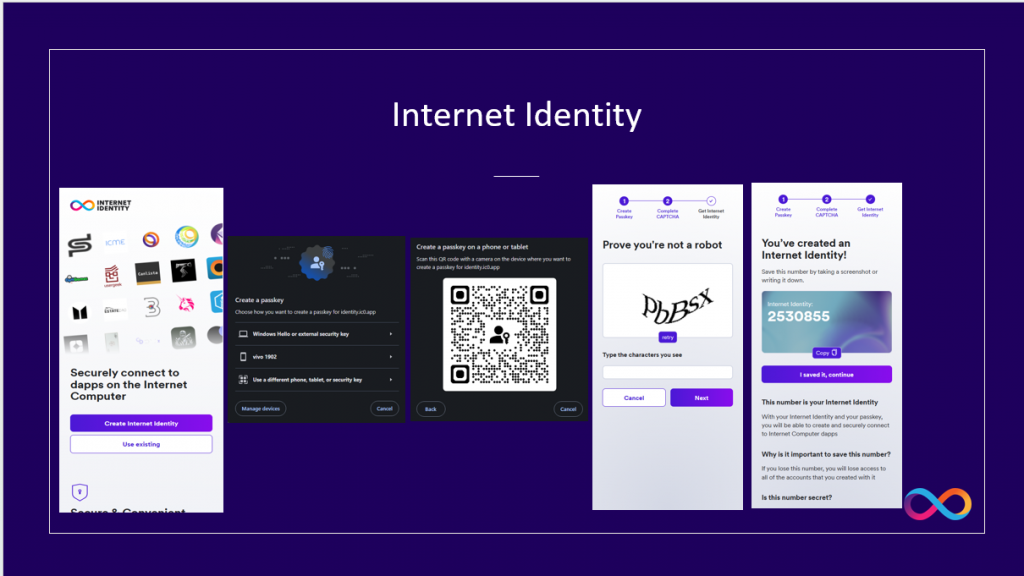
Internet Identity is a decentralized authentication system for the ICP. If you haven’t already, set up an Internet Identity:

  • Go to the Internet Identity portal: https://identity.ic0.app/.
  • Click “Create New” to create a new identity.
  • Follow the prompts to register your device . For Windows 10 user, require to use your mobile phone to scan the QR Code to store the credential information in the mobile phone. For Android device, recommend to use Google Lens to perform Passkey QR code scanning.
  • Note down your Internet Identity number (e.g., 12345).

 ICP Account Address

To receive ICP tokens, you need an ICP account address associated with your Internet Identity. Here’s how to get it:

  • Go to the Network Nervous System (NNS) Dapphttps://nns.ic0.app/.
  • Authenticate using your Internet Identity.
  • Once logged in, navigate to the “Accounts” section.

Plug Wallet

You may also use the Plug Wallet to store your ICP tokens. Plug wallet can be installed as a browser extension on a laptop or can be installed as a mobile app on your phone. You can download Plug Wallet using the link below.

https://plugwallet.ooo/

Network Nervous System

The Network Nervous System (NNS) is the decentralized governance system aka DAO that controls and manages the Internet Computer (ICP), a blockchain-based computing platform developed by the DFINITY Foundation. The NNS is one of the most critical components of the Internet Computer, as it enables the network to operate autonomously and evolve over time through community participation.


Key Functions of the NNS

  1. Governance:
    • The NNS allows ICP token holders to participate in the governance of the Internet Computer by submitting and voting on proposals.
    • Proposals can cover a wide range of topics, such as upgrading the protocol, adjusting network parameters, or funding ecosystem projects.
  2. Token Economics:
    • The NNS manages the ICP utility token, including its minting, burning, and distribution.
    • It also handles the creation of cycles, which are used to pay for computation and storage on the Internet Computer.
  3. Node Management:
    • The NNS oversees the addition, removal, and configuration of node machines that power the Internet Computer.
    • It ensures the network remains secure, scalable, and efficient.
  4. Canister Management:
    • The NNS manages the lifecycle of canisters (smart contracts) on the Internet Computer, including their creation, upgrading, and deletion.
  5. Network Upgrades:
    • The NNS facilitates seamless upgrades to the Internet Computer protocol without requiring hard forks or downtime.
    • This is achieved through a decentralized voting process.